Red Sea
Indian Ocean
Egypt
£2.50
Red Sea: The Vertical Gardens.
The Red Sea is defined by its dramatic topography. Unlike the sloping reefs found in many other parts of the world, the diving here is characterized by sheer underwater cliffs that plunge hundreds of meters into the deep. These currents-swept walls are the perfect foundation for the Red Sea's most beautiful feature: "hanging gardens" of vibrant soft corals. At legendary offshore sites like Elphinstone and The Brothers, these vertical reefs pulse with life, offering a spectacular backdrop for the pelagic predators that patrol the drop-off.
Why We Chose This Sticker Design
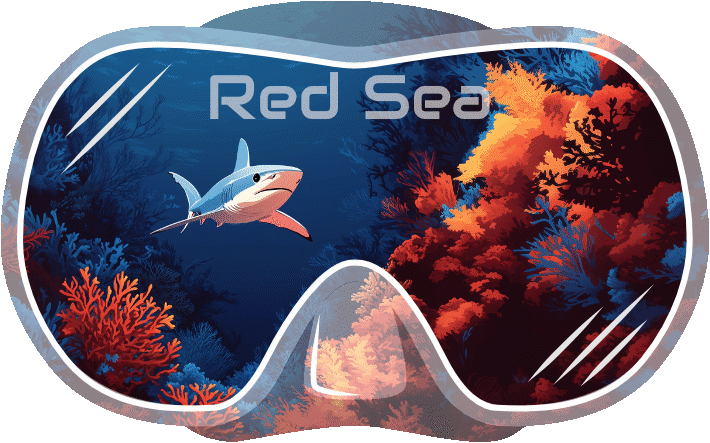
This design perfectly illustrates the thrill of a Red Sea wall dive. We focused on the contrast between the reef and the open ocean. On the right, we detailed the explosion of orange and red soft corals (Dendronephthya) that cling to the steep reef face, capturing the density of life found in the current. On the left, we balanced this with the deep blue void and a patrolling shark, representing the high-voltage encounters that happen when you look away from the wall and out into the blue.
Diving Red Sea
The Egyptian Red Sea is the most accessible world-class diving in reach of Europe: a four to five hour flight, warm clear water, and reefs that stay diveable all year. Hurghada, Sharm el-Sheikh and Marsa Alam each anchor a different stretch of coast, and between them sit Ras Mohammed National Park, a long list of wrecks and some of the healthiest hard coral in the region. It suits everyone from first-time divers on a house reef to liveaboard veterans heading offshore.
- Best time to dive
- Year-round; March to May and September to November are the sweet spots
- Difficulty
- Beginner to advanced, depending on the site
- Water temperature
- 21°C in winter to 29°C in late summer
- Visibility
- 20–30m and often more
Top dive sites
- •Ras Mohammed — Shark and Yolanda Reef — the classic Sinai drift
- •Elphinstone — Offshore reef with steep walls and oceanic whitetips
- •Abu Nuhas — Reef that has claimed several dive-able wrecks
What you’ll see
Frequently asked questions
When is the best time to dive the Red Sea?
It dives all year, which is a large part of its appeal. Spring and autumn — roughly March to May and September to November — give the best balance of warm water, calm seas and comfortable air temperatures. High summer is very hot topside and the water reaches around 29°C. Winter drops to about 21°C, when most divers want a 5mm or 7mm, but visibility is often excellent and the reefs are far quieter.
Is the Red Sea suitable for beginners?
Very much so. Warm water, good visibility and sheltered house reefs make it one of the most popular places in the world to learn or to dive soon after certifying. Resorts along the Hurghada and Marsa Alam coasts run shallow reef dives straight off the shore or a short boat ride away. The more demanding sites — offshore reefs like Elphinstone and the northern wrecks — involve current and depth, so they are usually reserved for Advanced divers.