Maine
USA/Canada
USA
£2.50
Maine: More Than Just Lobsters
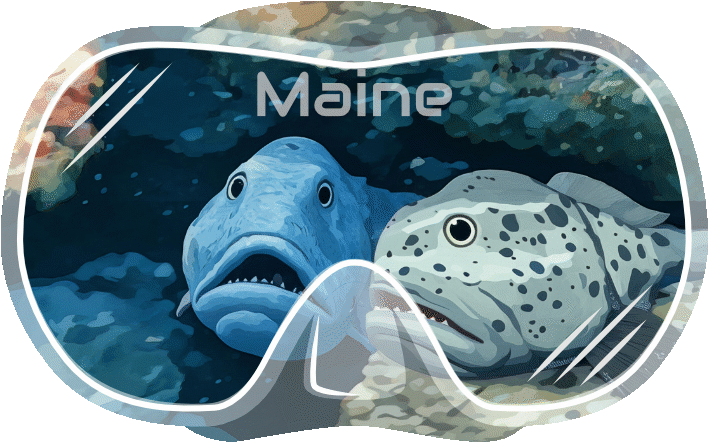
Maine isn't just about lobsters on a plate; it is about finding them in their underwater fortresses. The Gulf of Maine offers some of the most rugged, rewarding cold-water diving in the United States. It’s a world of boulder-strewn bottoms, kelp beds, and water that definitely wakes you up. But the chill is worth it for the encounters. This is the domain of the Atlantic Wolffish, a creature with a face only a mother (or a diver) could love. These bottom-dwellers are famous for their permanent scowls and impressive teeth, often found peeking out of rocky dens like grumpy gatekeepers of the North Atlantic.
Why We Chose This Sticker Design
We built this design around the undeniable charisma of the Atlantic Wolffish. We illustrated a pair of these slate-blue giants tucked into a rocky crevice, capturing that classic "cheek-to-cheek" behavior often seen when they share dens. We emphasized their distinct, powerful jaws and somewhat goofy expressions to highlight why they are such a favorite among cold-water enthusiasts. The muted blue and grey tones of the background perfectly reflect the moody, nutrient-rich waters of the New England coast.
Diving Maine
Diving in Maine is cold, green and genuinely rewarding for anyone who likes temperate marine life. The rocky coast drops into granite ledges and boulder fields covered in anemones, sea stars and kelp, with lobsters wedged into every crevice and harbour seals often curious enough to follow divers. Visibility is modest compared with warm-water destinations, and the water rarely climbs far into double figures, so this is drysuit territory. The community is small, which means uncrowded sites and a strong local knowledge network.
- Best time to dive
- July to September
- Difficulty
- Intermediate — cold water, surge and modest visibility
- Water temperature
- 4–15°C — drysuit strongly recommended
- Visibility
- 3–15m
Top dive sites
- •Casco Bay — Island ledges and boulder terrain near Portland
- •Bar Harbor area — Granite drop-offs with rich invertebrate life
- •Kittery and the southern coast — Easier shore access sites
What you’ll see
Frequently asked questions
When can you dive in Maine?
July to September is the practical season, when the water reaches its warmest — still only about 12 to 15°C at the surface, and colder below the thermocline. Visibility tends to improve later in the summer as spring plankton clears. Diving continues into the colder months for drysuit divers, and winter can offer surprisingly clear water, but sea conditions and air temperature make it a committed pursuit rather than a casual one.
What is diving in Maine actually like?
Temperate rather than tropical, and best approached on those terms. Expect granite ledges, kelp, and rock walls covered in anemones and sea stars, with lobsters and crabs everywhere and a good chance of curious harbour seals. Visibility is typically a few metres to fifteen. Divers who enjoy hunting for invertebrate life and don’t mind the cold rate it highly; anyone expecting Caribbean clarity and coral will not enjoy it.