North Carolina
USA/Canada
USA
£2.50
North Carolina: The Graveyard of the Atlantic
North Carolina is not for the faint of heart—it is the ultimate playground for big metal and big teeth. Known famously as the "Graveyard of the Atlantic," this coastline is littered with tragic history, from German U-boats to massive freighters. But these wrecks aren't just artifacts; they are shark magnets. This is hands-down the best place in the world to dive with Sand Tiger Sharks (Raggies) in huge numbers. It is a high-octane mix of maritime history and intense marine biology that you just can't find anywhere else.
Why We Chose This Sticker Design
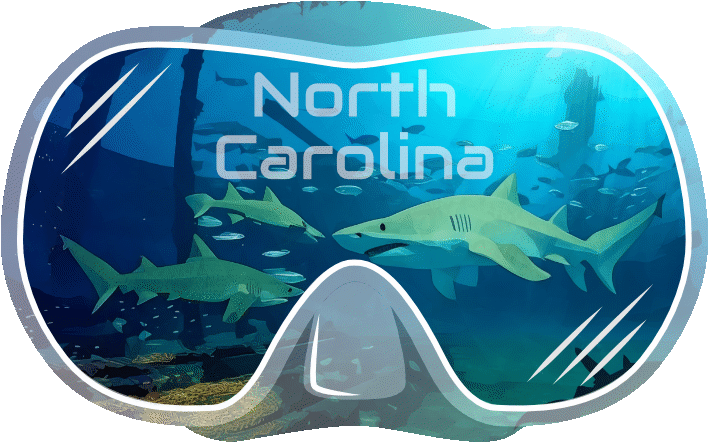
We couldn't make this sticker without featuring the wreck’s most famous residents. We put the Sand Tiger Shark front and center, capturing that iconic, snaggle-toothed grin that looks terrifying but belongs to a surprisingly docile animal. We set the scene with the ghostly silhouette of a ship's tower in the background, surrounded by schooling baitfish, to capture the exact vibe of descending onto a "living wreck". The deep, rich blues represent the deep Atlantic water, making this a badge of honor for anyone who has braved the offshore currents.
Diving North Carolina
The waters off North Carolina are known as the Graveyard of the Atlantic, and the name is earned — shifting shoals, storms and two world wars have put hundreds of ships on the bottom. The Gulf Stream runs close in, bringing warm, clear blue water over wrecks that would otherwise be typical cold Atlantic diving. The signature sight is sand tiger sharks, which congregate on the wrecks in large numbers through the warmer months, hanging almost motionless above the wreckage. The U-352, a German U-boat sunk in 1942, is the best-known dive.
- Best time to dive
- June to September, when the Gulf Stream is closest
- Difficulty
- Advanced — offshore, deep and current-swept
- Water temperature
- 21–28°C in summer offshore
- Visibility
- 15–30m
Top dive sites
- •U-352 — German U-boat sunk in 1942, around 34m
- •Papoose — Tanker wreck known for sand tiger sharks
- •Aeolus — Artificial reef wreck with heavy shark traffic
- •Caribsea — Broken wreck often thick with sand tigers
What you’ll see
Frequently asked questions
When can you see sand tiger sharks in North Carolina?
They gather on the wrecks in numbers through the warmer months, broadly from late spring into autumn, with summer the most reliable period. Despite their appearance — a mouth full of visible ragged teeth — sand tigers are placid towards divers and will hold position while you watch from a few metres away. On wrecks like the Papoose and Caribsea it is common to see dozens on one dive, drifting slowly over the structure.
How difficult is wreck diving in North Carolina?
It is proper offshore diving. Sites sit well out to sea, so boat rides are long and conditions can be rough, and most wrecks lie between 25 and 40 metres with current running over them. Divers descend and ascend on the anchor line, and nitrox is standard. Operators generally require Advanced Open Water with real experience, and many divers here hold deco or technical certifications for the deeper sites.