New Zealand
Pacific & Oceania
New Zealand
£2.50
New Zealand: Where Mountains Meet the Deep
New Zealand offers a diving experience unlike anywhere else on Earth. While the north has subtropical reefs, the true icon of Kiwi diving is the dramatic seascape of Fiordland. Here, towering mountain ranges plunge directly into the ocean, continuing as vertical walls into the abyss. A unique freshwater layer sits on top of the saltwater, blocking light and tricking deep-water species—like the famous Black Coral—into growing just meters from the surface. It is a moody, majestic wilderness where you can encounter Fur Seals, Dolphins, and migrating whales against a backdrop of snow-capped peaks.
Why We Chose This Sticker Design
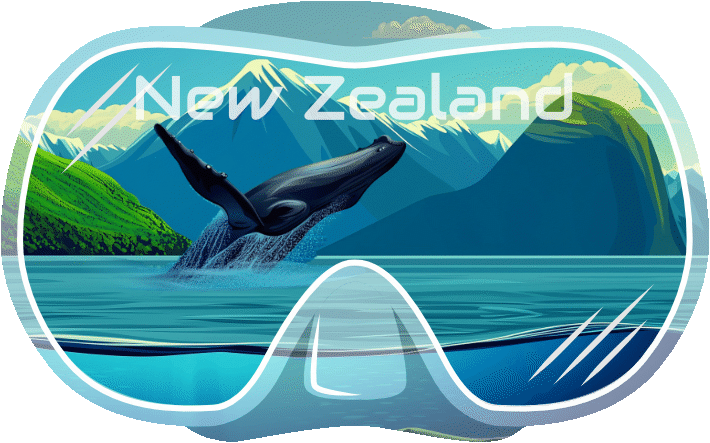
This artwork is defined by the collision of land and sea. We utilized a split-shot composition to showcase the country's iconic, jagged mountain ranges rising steeply into the sky, grounding the viewer in the distinct geography of the South Island. To match the grandeur of the scenery, we featured a massive Humpback Whale breaching in the foreground. This dynamic action shot perfectly represents the wild, untamed nature of New Zealand, where the scenery above the water is just as breathtaking as the giants swimming beneath it.
Diving New Zealand
New Zealand's best-known diving is the Poor Knights Islands off the Northland coast, a marine reserve where a subtropical current meets temperate water and produces an unusual mix of species. The islands are volcanic, so the diving is all arches, caves and sheer walls — Rikoriko Cave is among the largest sea caves in the world. Further south, Fiordland offers a genuine oddity: a freshwater layer stained dark by tannins sits on top of the seawater, cutting the light so much that deep-water species like black coral grow within recreational depths.
- Best time to dive
- February to May, when the water is warmest and clearest
- Difficulty
- Intermediate — cool water and some exposure
- Water temperature
- 14–23°C — a thick wetsuit or drysuit
- Visibility
- 15–30m at the Poor Knights
Top dive sites
- •Poor Knights Islands — Marine reserve with arches, caves and walls
- •Rikoriko Cave — One of the largest sea caves in the world
- •Milford Sound — Black coral in shallow water under the tannin layer
- •HMNZS Canterbury — Frigate scuttled as an artificial reef
What you’ll see
Frequently asked questions
When is the best time to dive the Poor Knights?
February to May, at the end of the southern summer, when water temperature peaks at around 20 to 23°C and visibility is at its best. The subtropical current bringing warm water down the coast is strongest then, and it is also when large numbers of stingrays gather in the archways. Winter diving is possible with a drysuit and often delivers surprisingly clear water, but boat trips are more weather-dependent.
Why is Fiordland diving unusual?
Heavy rainfall creates a layer of fresh water several metres deep sitting on top of the seawater, stained dark brown by tannins leached from the forest. That layer blocks much of the light, so species that would normally live in deep water — most famously black coral — grow at depths recreational divers can reach. It is a genuinely strange experience: you drop through dim, tea-coloured fresh water into clear, dark seawater below.