Cenotes
Latin America
Mexico
£2.50
Cenotes: The Sacred Underworld of the Maya
Diving the Cenotes of Mexico’s Yucatan Peninsula is the closest you can get to floating in outer space without leaving Earth. These aren't just caves; they are vast, flooded cathedrals of limestone and crystal-clear fresh water. For the Maya, these were portals to Xibalba (the underworld), and once you slip beneath the surface, you understand why. The visibility is infinite, and the silence is profound. But the real magic happens when the jungle sun hits the water, creating laser-like beams of light that dance through the darkness. It is an ethereal, spiritual experience that completely redefines what a dive can be.
Why We Chose This Sticker Design
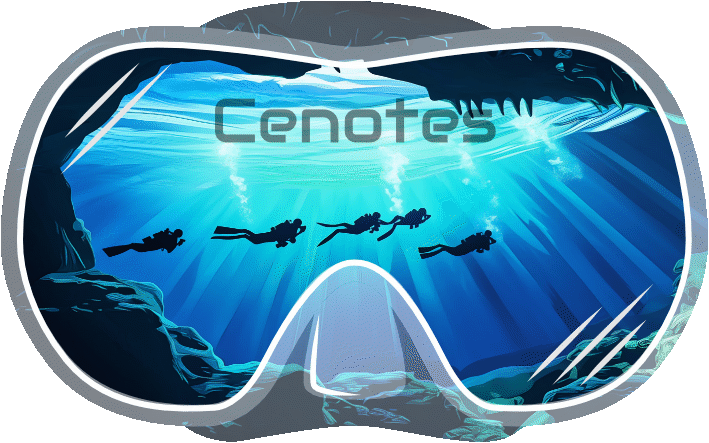
The defining feature of a Cenote dive is the "light show," so that had to be the hero of this sticker. We illustrated the view from the cavern zone looking back toward the entrance to capture those spectacular "God rays" piercing through the water. We used high-contrast silhouettes for the divers to emphasize the scale of the cave and to mimic that feeling of following your guide through the twilight. The electric blues against the deep black rock perfectly recreate that moment when you turn off your torch and just let the natural light guide you home.
Diving Cenotes
The cenotes of Mexico's Yucatán Peninsula are flooded limestone sinkholes that open into some of the longest underwater cave systems on earth. The water is rainwater filtered through rock, so it is astonishingly clear — often over 50 metres of visibility — and light beams pour through the openings into rooms hung with stalactites. Most cenote diving sold to visitors is cavern diving, which stays inside the daylight zone on a guided line and is open to certified divers. Going beyond that is full cave diving and needs specific training.
- Best time to dive
- Year-round — conditions barely change
- Difficulty
- Cavern diving suits certified divers; cave diving needs full training
- Water temperature
- 24–25°C year-round
- Visibility
- 30–100m
Top dive sites
- •Dos Ojos — The classic cavern route, bright and accessible
- •Angelita — Deep cenote with a hydrogen sulphide cloud at around 30m
- •The Pit — Deep shaft with dramatic light beams — advanced
- •Car Wash (Aktun Ha) — Shallow and easy, good for a first cenote
What you’ll see
Frequently asked questions
What is the difference between cavern and cave diving in the cenotes?
Cavern diving stays within the daylight zone, always in sight of the exit, following a permanent guideline with a qualified cenote guide — an Open Water or Advanced certified diver can do it. Cave diving goes beyond natural light into the system proper, and requires full cave certification, redundant gas and lights, and proper training. Almost every cenote tour sold to visitors is a cavern dive. Do not let anyone talk you past that line without the training.
What is the cloud in Angelita cenote?
A layer of hydrogen sulphide sitting at roughly 30 metres where fresh water meets denser salt water below, formed by decomposing organic matter. It looks exactly like a river of cloud with dead trees emerging from it, and dropping through the layer is genuinely disorientating — visibility falls away and the water below is dark. It is a deep dive in an overhead-adjacent environment and is normally restricted to Advanced divers with good buoyancy and gas planning.