Costa Rica
Latin America
Costa Rica
£2.50
Costa Rica: Coast of Pura Vida
Costa Rica is where the jungle meets the ocean. While the offshore Cocos Island is famous for Hammerheads, the coastal waters—particularly around the Osa Peninsula—are a superhighway for whales and dolphins. This is one of the few places in the world where you can see massive "super-pods" of Spinner and Pan-tropical Spotted Dolphins that number in the thousands, stretching as far as the eye can see. It is a destination defined by its biological intensity, both above and below the surface.
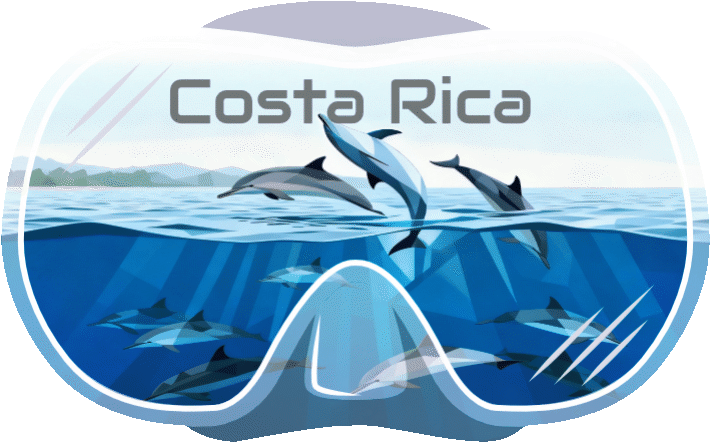
Why We Chose This Sticker Design
This design uses a split-shot composition to capture the full energy of the coast. Above the waterline, we illustrated the lush, green volcanic mountains that define the Costa Rican landscape, with three dolphins breaching in the open air. Below the surface, the design reveals the rest of the pod gliding through the deep blue Pacific, emphasizing the seamless connection between the land and the sea in this region.
Diving Costa Rica
Costa Rica's mainland diving on the Pacific coast is not about clear blue water — visibility is often moderate and the water can be surprisingly cool where upwelling hits. What it delivers instead is big animals close to shore. The Bat Islands off Guanacaste hold one of the more reliable bull shark sites in the Americas, and the Catalina Islands see manta rays through the cooler months. It also works as a warm-up or an alternative to the long offshore crossing to Cocos Island.
- Best time to dive
- Bull sharks June to November; mantas December to April
- Difficulty
- Intermediate to advanced — surge, current and cool thermoclines
- Water temperature
- 24–29°C at the surface, dropping sharply at thermoclines
- Visibility
- 10–25m, variable
Top dive sites
- •Bat Islands (Islas Murciélagos) — Bull sharks at Big Scare
- •Catalina Islands — Manta rays in the cooler months
- •Caño Island — Reef and pelagic diving off the Osa Peninsula
What you’ll see
Frequently asked questions
When can you dive with bull sharks in Costa Rica?
The Bat Islands site known as Big Scare is most productive during the rainy season, roughly June to November, when bull sharks gather in numbers. It is a deeper dive with surge and current and no bait is used, so encounters are natural but not guaranteed. Operators run it as a long day trip from the Guanacaste coast and generally require Advanced Open Water with good experience given the conditions.
Is Costa Rica good for diving compared with Cocos Island?
They are different propositions. Cocos, 550 kilometres offshore, is a world-class shark destination reachable only on a long liveaboard trip. Mainland Costa Rica offers accessible day-boat diving with genuine big-animal chances — bull sharks and mantas — but with moderate visibility and cooler thermoclines than the tropical average. If your expectation is Caribbean-style clarity you will be disappointed; if you want animals close to shore, it delivers.