Cornwall
UK/Europe
England
£2.50
Cornwall: The Land of the Gentle Giants
Cornwall might be famous for pasties and surf, but every summer, its waters turn into a prehistoric playground. This is the UK’s premier destination for spotting the second-largest fish in the ocean: the Basking Shark. These massive, plankton-eating titans migrate to the Cornish coast to feast in the nutrient-rich surface currents. It is a snorkeling experience that feels totally surreal—drifting alongside a bus-sized shark with a mouth like a cavern, right in the English Channel! It’s the ultimate reminder that you don't need to go to the tropics to find world-class marine megafauna.
Why We Chose This Sticker Design
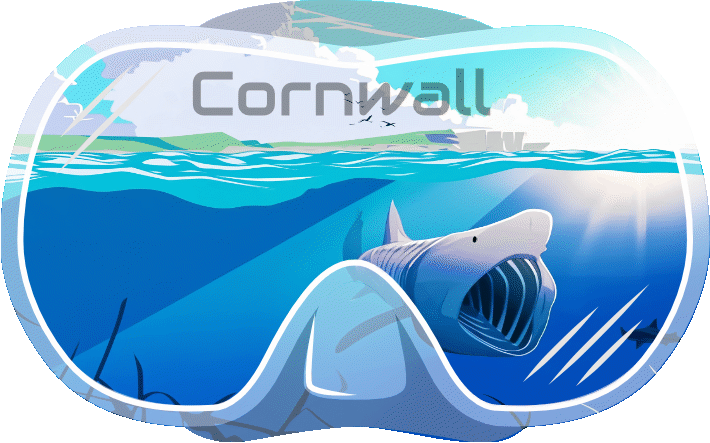
We went with a split-shot here to capture the unique duality of a Cornish summer. Topside, we illustrated the classic, rugged English coastline with its green cliffs and seabirds—totally peaceful and scenic. But slip just an inch below the surface, and you are face-to-face with a leviathan! We illustrated the Basking Shark with its mouth wide open in full feeding mode because that is the "money shot" everyone travels here to see. The rays of light filtering down through the water emphasize the shallow, surface-level connection where these encounters happen.
Diving Cornwall
Cornwall is where a lot of British divers fall in love with cold water. The south coast reefs around the Manacles are carpeted in jewel anemones in colours that look tropical until the 12°C water reminds you otherwise, and the county's wreck list runs to hundreds of ships lost on the Lizard and the Runnel Stone. The headline animal is the basking shark — the world's second largest fish, which arrives to feed on plankton blooms through late spring and summer, and is usually met on a snorkel trip rather than on scuba, since it feeds at the surface. Blue sharks draw a second season of offshore trips later in the summer. Grey seals are resident year-round. It is genuinely good diving that happens to need a drysuit and a thermos.
- Best time to dive
- June to October, when visibility and water temperature peak
- Difficulty
- Intermediate — cold water, tides, and boat diving
- Water temperature
- 8–17°C — drysuit, or a 7mm semi-dry in late summer
- Visibility
- 5–15m, best on a settled neap tide
Top dive sites
- •The Manacles — Reef pinnacles smothered in jewel anemones, plus wrecks
- •Porthkerris — Excellent shore dive straight off the beach
- •Silver Steps, Falmouth — Easy shore entry, good for skills and night dives
- •Runnel Stone — Exposed pinnacle with big shoals — slack water only
- •Offshore shark trips — Basking sharks early summer, blue sharks later
What you’ll see
Frequently asked questions
When can you see basking sharks in Cornwall?
Basking sharks typically appear off the Cornish coast from around May into August, following plankton blooms, with sightings concentrated in warm settled spells. They feed at the surface with their mouths open, so encounters are almost always by snorkel from a boat rather than on scuba — bubbles tend to push them away. UK law protects them from disturbance, so reputable operators keep their distance, drop snorkellers ahead of the animal rather than chasing it, and will call off an encounter if the shark shows signs of being bothered.
How cold is diving in Cornwall and what should I wear?
Water ranges from roughly 8°C in early spring to 16–17°C at the end of summer, which is the warmest UK sea you will find. Most local divers wear a drysuit year-round. In August and September a good 7mm semi-dry with hood and gloves is workable for shorter dives, but if you are doing several dives a day or any decompression stops you will be far more comfortable dry. Hoods and gloves are not optional at any time of year.
What is the best time of year to dive Cornwall?
June to October is the window most divers target. Visibility improves once the spring plankton bloom settles, water temperature peaks in late August and September, and the summer weather gives more days when exposed sites like the Runnel Stone are actually diveable. Time your trip around neap tides where you can — slack water is longer and visibility is generally better than on big spring tides. Winter diving happens, but is mostly sheltered shore sites for the committed.