Lundy
UK/Europe
England
£2.50
Lundy: The UK’s First Marine Reserve
Lundy Island is a granite outcrop in the middle of the Bristol Channel that stands as a beacon for British diving. As the UK's first statutory Marine Nature Reserve, it is a protected haven where marine life thrives. While there are shipwrecks and dramatic drop-offs, the real reason divers flock here is for the Atlantic Grey Seals. These "puppy dogs of the sea" are incredibly accustomed to divers and snorkelers, often nipping at fins and playing hide-and-seek in the shallow kelp forests. It is a rugged, wild experience that proves you don't need tropical water to have world-class animal encounters.
Why We Chose This Sticker Design
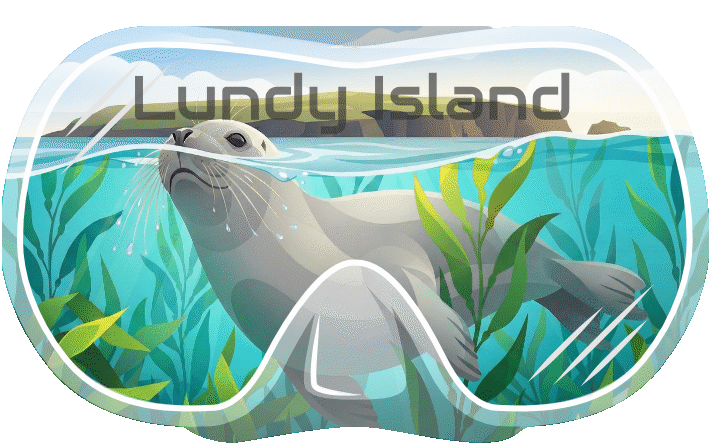
To illustrate the unique nature of a Lundy trip, we opted for a split-level composition. The magic of Lundy often happens right at the surface, so we depicted a curious Grey Seal "spy-hopping"—poking its head out of the water to check out the boat. Below the waterline, we filled the frame with lush green kelp fronds to represent the dense underwater forests that define the Bristol Channel. Above the surface, the rugged silhouette of the island’s cliffs grounds the image in its distinct geography.
Diving Lundy
Lundy is a granite island in the Bristol Channel with an outsized place in British marine conservation history: it became the UK's first statutory Marine Nature Reserve in 1986, gained a no-take zone in 2003, and was designated the country's first Marine Conservation Zone in 2010. Decades of protection produced exactly what protection is supposed to produce — larger fish, recovering lobster and a reef in noticeably better condition than the mainland. For most divers, though, the draw is the grey seals, which are as playful here as at the Farnes. The catch is the Bristol Channel's enormous tidal range, which makes slack-water timing non-negotiable and puts the island firmly in the hands of skippers who know the water.
- Best time to dive
- June to September
- Difficulty
- Intermediate — strong tides demand slack-water timing
- Water temperature
- 10–17°C — drysuit or a good semi-dry
- Visibility
- 5–15m, best on neaps
Top dive sites
- •Knoll Pins — Pinnacles covered in jewel anemones — the signature dive
- •Gannets Rock — Seal encounters in the shallows
- •Iona II — Victorian paddle steamer wreck, protected
- •The Rattles — Gullies and boulder terrain on the east side
- •Landing Bay — Sheltered and shallow, good for a second dive
What you’ll see
Frequently asked questions
How do I dive Lundy?
By boat, from the north Devon coast — hard boats run out of Ilfracombe and Bideford, and the crossing takes a couple of hours depending on conditions. Some groups make a day of it with two dives; others book multi-day charters. There is limited accommodation on the island itself through the Landmark Trust, but no dive centre, so almost everyone dives from a visiting boat. Because the crossing is exposed and the tides are serious, trips are heavily weather-dependent and cancellations are normal.
Why are the tides at Lundy so important?
The Bristol Channel has one of the largest tidal ranges in the world, and Lundy sits right in the flow. Currents around the island can run hard enough to make diving impossible outside slack water, and they change fast. In practice this means dive times are dictated by the tide tables rather than by convenience, sites are chosen according to the state of the tide, and neap tides give a longer, more forgiving window than springs. It is the single biggest reason to dive Lundy with a skipper who knows it well.
What makes Lundy special for marine life?
Sustained protection. As the UK's first Marine Nature Reserve and later its first Marine Conservation Zone, with a no-take zone in place since 2003, Lundy has had far longer to recover than almost anywhere else in British waters — and the difference is visible in the size of the wrasse, the density of the jewel anemones and the presence of crawfish and lobster that would have been fished out elsewhere. It also hosts sunset cup coral, a rare species with very few UK sites.