Croatia
UK/Europe
Croatia
£2.50
Croatia: The Jewel of the Adriatic
Croatia is the undisputed gem of the Adriatic Sea. While it might lack the coral density of the tropics, it makes up for it with some of the most dramatic underwater topography in Europe. We are talking about massive limestone cliffs that plunge into the sea, creating a labyrinth of caves, caverns, and swim-throughs that are just begging to be explored. The water here is famous for its "liquid glass" visibility, perfect for spotting the hidden treasures tucked away in the swaying seagrass meadows. It is relaxed, scenic diving at its absolute finest.
Why We Chose This Sticker Design
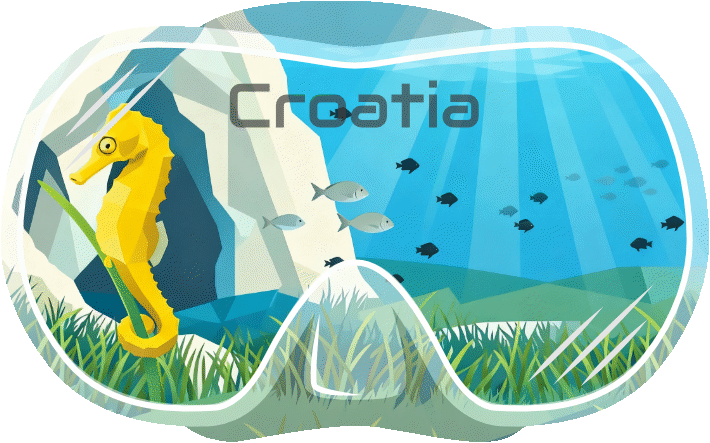
For this artwork, we turned the spotlight on the Adriatic’s most elusive and beloved resident: the Seahorse. Finding one of these bright yellow gems clinging to a blade of grass is a highlight of any Croatian dive, so we placed him front and center as the guardian of the reef. To capture the region’s distinct landscape, we framed the scene with jagged white limestone rocks and lush green seagrass, creating a contrast that feels distinctly Mediterranean. It is a vibrant, sunny design that perfectly matches the laid-back vibe of the Dalmatian coast.
Diving Croatia
Croatia's diving is Adriatic in character: clear, blue, and heavy on history. The signature dive is the Baron Gautsch, an Austro-Hungarian passenger steamer that struck a mine off Rovinj in August 1914 and went down with heavy loss of life — she sits between roughly 28 and 40 metres, remarkably intact, and is protected such that you dive her with a licensed guide. Beyond her, the coastline offers a long list of wrecks, limestone caves and walls scattered across more than a thousand islands, with the Kornati archipelago and the island of Vis particularly well regarded. Visibility of twenty to thirty metres is normal in summer, water reaches the mid-twenties, and the topside sailing-holiday scenery does no harm at all.
- Best time to dive
- May to October
- Difficulty
- Intermediate — several signature wrecks sit below 30m
- Water temperature
- 14°C in spring to 25°C in late summer
- Visibility
- 20–30m
Top dive sites
- •Baron Gautsch — WWI passenger steamer off Rovinj — guided dives only
- •Vis island wrecks — B-17 bomber and several WWII ships
- •Kornati National Park — Walls and drop-offs in protected water
- •Premuda “Cathedral” — Cavern system with dramatic light shafts
- •Coriolanus — British minesweeper lost in 1945
What you’ll see
Frequently asked questions
Do I need a permit to dive in Croatia?
Foreign divers generally need to dive through a licensed Croatian dive centre, and there has historically been a diving card or permit requirement administered locally — arrangements have changed over the years, so confirm current rules with your operator before travelling. Certain protected wrecks, including the Baron Gautsch, may only be dived with an authorised guide, and some are inside marine protected areas with additional restrictions and fees. In practice, booking through an established centre handles all of this for you.
What is the best wreck dive in Croatia?
The Baron Gautsch, without much argument. An Austro-Hungarian passenger ship that struck a mine in August 1914 with significant loss of life, she lies off Rovinj in roughly 28 to 40 metres and is unusually intact for her age, with recognisable decks and superstructure. Because she is both a war grave and a protected monument, dives are guided and penetration is restricted. Her depth puts her firmly in Advanced territory, and many divers use nitrox to get worthwhile bottom time.
When is the best time to dive Croatia?
May to October, with the sweet spot in late summer. Water climbs to around 25°C at the surface by August and September — though expect a sharp thermocline below about 20 metres, where it can drop into the high teens, so a 5mm plus a hood is sensible even in high summer. Visibility is consistently good across the season. July and August bring the Adriatic tourist peak, so late May, June and September offer the same diving with fewer people and lower prices.