Malta
UK/Europe
Malta
£2.50
Malta: The Gem of the Mediterranean
Malta is a tiny island nation with a massive underwater footprint. Known for having some of the clearest water in the Mediterranean, its limestone coastlines are honeycombed with caves, tunnels, and dramatic arches like the famous Blue Hole. But what truly sets Malta apart is its history. From WWII bombers to purpose-sunk patrol boats, the seabed here is a playground for wreck divers. It is a place where you can explore a sunken ship in the morning and walk through a medieval fortress in the afternoon.
Why We Chose This Sticker Design
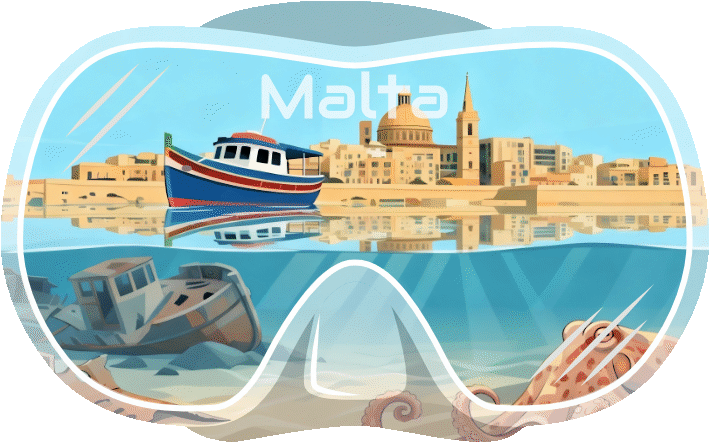
This design perfectly encapsulates the "Split Personality" of a Malta dive trip. We used a split-shot composition to tell the full story. Above the waterline, we featured the iconic honey-colored architecture of Valletta and a traditional Luzzu fishing boat with its "Eye of Osiris," grounding the image in Maltese culture. Below the surface, we showcased the clear blue water with a sunken wreck resting on the sandy bottom, while a curious Common Octopus—a staple of Mediterranean night dives—peeks out from the corner.
Diving Malta
Malta has built one of Europe's most efficient diving destinations out of clear water, walkable shore entries and a deliberate policy of scuttling ships. Visibility of thirty metres or more is routine, the water is warm enough for a 5mm through the summer, and the wreck list is remarkable for a country this small — the tanker Um El Faroud, the patrol boat P29 and the tugboat Rozi all sit within recreational depths, most of them reachable from the shore at Cirkewwa. Around the wrecks are caverns, arches and reef walls in the limestone. It suits almost everyone: a beginner can shore dive Cirkewwa comfortably, while technical divers have deeper wrecks and cave systems to work through, and everything is a short drive apart.
- Best time to dive
- May to October, though Malta dives year-round
- Difficulty
- Beginner to technical — sites for every level
- Water temperature
- 15°C in winter to 27°C in late summer
- Visibility
- 20–40m
Top dive sites
- •Um El Faroud — Large tanker scuttled in 1998, around 25–36m
- •Cirkewwa — Shore-dive hub — arch, reef and the Rozi tug
- •P29 patrol boat — Intact and photogenic at about 35m
- •HMS Maori — Shallow WWII destroyer wreck in Valletta
- •Ghar Lapsi — Easy shore dive through caverns and swim-throughs
What you’ll see
Frequently asked questions
When is the best time to dive Malta?
May to October is the main season, when the sea is warmest and calmest — late summer, around August into early October, is the pick if you want water in the mid-twenties and long days. Malta dives all year, and winter offers excellent visibility with almost no crowds, though the water drops to around 15°C and you will want a 7mm or a drysuit. Winter storms and northerly winds can close exposed sites, but the island is small enough that operators simply move to the sheltered side.
Can you shore dive in Malta?
Extensively, and it is one of the island's biggest advantages. Cirkewwa in the north is the best-known shore-diving site in the Mediterranean, with easy entry steps giving access to an arch, a reef wall and the Rozi tugboat without ever boarding a boat. Ghar Lapsi, Wied iz-Zurrieq and several other sites work the same way. It keeps costs down, removes boat schedules from your day, and means you can dive when you like — hire kit, drive, park and walk in.
What are the best wrecks to dive in Malta?
The Um El Faroud is the standout — a large tanker scuttled in 1998 off Wied iz-Zurrieq, sitting at roughly 25 to 36 metres and substantial enough to warrant several dives. The P29 patrol boat and the Rozi tugboat are both intact, shallow enough for Advanced divers and highly photogenic. HMS Maori in Valletta harbour is very shallow and suits newer divers. Many were scuttled deliberately as artificial reefs, so they are clean, structurally sound and far safer than wrecks that went down by accident.