Farne Islands
UK/Europe
England
£2.50
Farne Islands: The UK’s Seal City
If you want to play underwater with a wild animal that acts like a golden retriever, the Farne Islands are the place to go. Located off the coast of Northumberland, this group of rocky islands is famous for hosting thousands of Grey Seals. It is widely considered one of the best cold-water interaction dives in the world. These seals aren't just present; they are obsessed with divers. They will chew on your fins, tug your hood, and pose for selfies. It is chaotic, hilarious, and freezing cold—but you’ll be laughing so hard you won’t even notice the temperature.
Why We Chose This Sticker Design
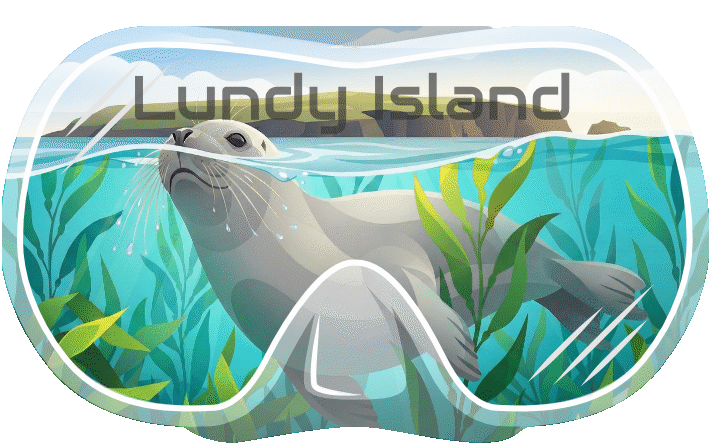
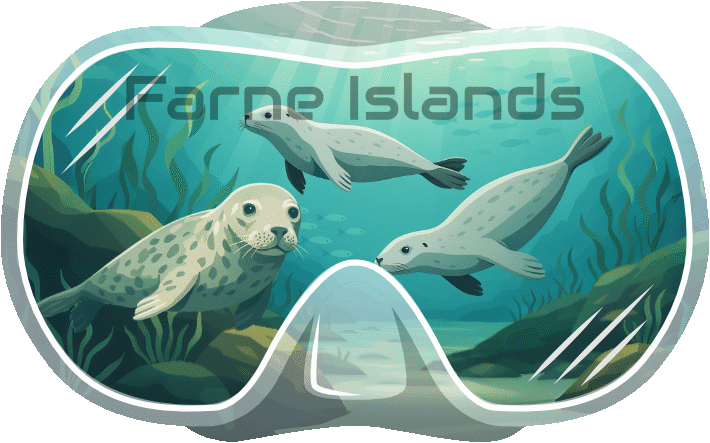
We built this entire sticker around the playful curiosity of the Grey Seal because that is the defining memory of any Farne Islands trip. We illustrated a trio of seals: one looking directly at you with those big, soulful "puppy dog" eyes, and two others darting around in the background to capture their chaotic energy. The color palette is strictly cold-water Atlantic—lots of muted greens and teals—to match the kelp-covered rocks that make up their playground. It’s a design that feels just as cheeky as the animals themselves.
Diving Farne Islands
The Farne Islands off the Northumberland coast are the best seal dive in Britain, and possibly the most purely fun diving the UK offers. Several thousand grey seals live on the islands, and the juveniles are relentlessly curious — they will hang upside down in front of your mask, tug at fins, and follow divers around the kelp gullies for an entire dive. This is not a distant wildlife encounter; it is closer to being investigated by a labrador. The underwater terrain is good too, with kelp forests, gullies and a scattering of wrecks, and the islands are a National Trust reserve with enormous seabird colonies above water. Boats run from Seahouses, and dives are typically shallow enough that bottom time is limited by cold rather than by depth.
- Best time to dive
- June to October
- Difficulty
- Easy to intermediate — shallow, but cold with some tidal movement
- Water temperature
- 8–15°C — drysuit strongly recommended
- Visibility
- 5–15m
Top dive sites
- •Knivestone — Exposed reef with the liveliest seal encounters
- •Longstone End — Kelp gullies and reliable seal traffic
- •Crumstone — Boulder terrain, good for wide-angle photography
- •Somali wreck — WWII steamer bombed in 1941, for a change of pace
- •Big Harcar — Shallow gullies, ideal in bright conditions
What you’ll see
Frequently asked questions
When is the best time to dive with seals at the Farne Islands?
June to October gives the best combination of settled seas, workable visibility and warm-ish water. Seals are resident year-round, so encounters are not really seasonal, but the juveniles that do most of the interacting are boldest later in the summer. Pupping season runs from around October into December, when boats keep further from the haul-out beaches to avoid disturbance. Diving in the depths of winter is possible but the North Sea is genuinely cold and the weather window narrow.
Is it safe to dive with grey seals?
Broadly yes, and encounters are among the highlights of UK diving, but treat them as large wild predators rather than pets. Juveniles mouth and tug at fins, which is play rather than aggression, though a nip through a drysuit fin is not unheard of. The guidance is simple: let them approach you, stay still and horizontal, do not chase or grab, and keep your hands close to your body. Adult bulls are much larger and less playful — give them space, particularly around the breeding season.
How deep is the diving at the Farnes?
Shallow, which is part of what makes it so relaxed. Most sites sit between 10 and 25 metres, and the best seal action tends to happen in the top 10 metres among the kelp where the light is good. That means long, easy no-decompression dives — the limiting factor is almost always cold rather than air or depth. It also makes the Farnes very approachable for divers with modest experience, provided they are comfortable diving dry in a bit of surface chop.