The Azores
UK/Europe
Portugal
£2.50
The Azores: The European Hawaii
The Azores is a volcanic archipelago in the middle of the Atlantic that feels like a forgotten paradise. Often called the "Hawaii of Europe" due to its lush green peaks and dramatic cliffs, it is a destination where the landscape above water is just as impressive as the life below. This is one of the world's premier destinations for whale watching and diving with pelagics. The deep waters surrounding islands like Pico and Sao Miguel act as a highway for migrating giants, including Sperm Whales, Blue Whales, and pods of dolphins numbering in the thousands.
Why We Chose This Sticker Design
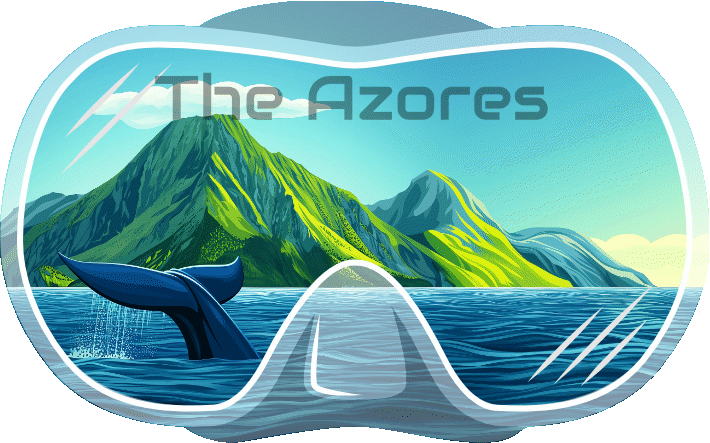
This design captures the synergy between the volcanic islands and the deep ocean. We used a split-shot composition to showcase the iconic, cone-shaped Mount Pico rising majestically from the sea, grounding the viewer in the specific geography of the archipelago. To represent the rich marine life, we featured the fluke of a diving whale in the foreground, splashing as it descends into the deep blue. It’s a dynamic image that celebrates the Azores as a place where mountains meet megafauna.
Diving The Azores
The Azores sit in the middle of the Atlantic, and they dive like it. This is blue-water, big-animal territory: seamounts rising from deep ocean, baited shark dives with blues and makos, and the mobula ray aggregations at Princess Alice Bank, a submerged seamount some 45 nautical miles offshore where hundreds of devil rays gather in mid-summer. Getting there means several hours on a boat each way and then a descent into open blue water with no reference — magnificent, and not the place to discover you are uneasy without a bottom in sight. Closer in, the volcanic islands offer arches, wrecks and dramatic terrain, and the surface intervals come with sperm whales and dolphins. For divers who have done reefs and want ocean, it is one of the most exciting destinations in Europe.
- Best time to dive
- July to October — mobulas peak mid-summer
- Difficulty
- Advanced — offshore, blue water, current and long crossings
- Water temperature
- 17–24°C
- Visibility
- 20–30m and often more offshore
Top dive sites
- •Princess Alice Bank — Offshore seamount, mobula rays in summer
- •Ambrósio, Santa Maria — Reliable devil ray aggregation site
- •Blue shark dives — Baited blue-water dives with blues and makos
- •Formigas islets — Remote reef with big pelagic traffic
- •Dori wreck, Faial — US Liberty ship, accessible and intact
What you’ll see
Frequently asked questions
When is the best time to dive the Azores?
July to October, and quite narrowly so. The mid-Atlantic weather makes offshore trips to seamounts like Princess Alice Bank impossible for much of the year, and the mobula ray aggregations peak in mid-summer, roughly July into September. Water reaches its warmest at around 23 to 24°C in late summer. Outside this window many operators reduce or stop offshore trips entirely, and while coastal diving continues, the pelagic encounters that justify the trip are seasonal.
How experienced do I need to be to dive Princess Alice Bank?
Considerably. The site is a seamount roughly 45 nautical miles offshore, meaning a boat crossing of two to three hours each way in Atlantic swell, followed by a descent in open blue water where the seamount top sits at around 35 metres and there is no visual reference on the way down. Current is common. Operators typically require Advanced Open Water with meaningful experience, good buoyancy without a reference, and confidence deploying an SMB. Seasickness on the crossing catches out more divers than the diving does.
Are the shark dives in the Azores baited?
Yes. Blue shark and mako encounters in the Azores are run as baited blue-water dives, typically with a chum line drawing the sharks in while divers stay in a group at shallow depth beneath the boat. Reputable operators use it to attract rather than feed, brief thoroughly, and cap group sizes. If baited encounters sit uncomfortably with you ethically, it is worth knowing in advance, because there is no realistic way to encounter these species here otherwise — they are open-ocean animals that do not gather at a reef.