Anilao
South East Asia
Philippines
£2.50
Anilao: The Nudibranch Capital of the World
If you’re obsessed with the tiny, weird, and wonderful, Anilao is your holy grail. Located in the Philippines, this is the undisputed king of muck diving and macro photography. It’s not about drifting fast or chasing big shadows; it’s about slowing down, getting close to the reef, and hunting for treasure in the black sand. From alien-looking crustaceans to literally hundreds of species of sea slugs, Anilao is where you go to witness the ocean’s most vibrant miniature masterpieces up close.
Why We Chose This Sticker Design
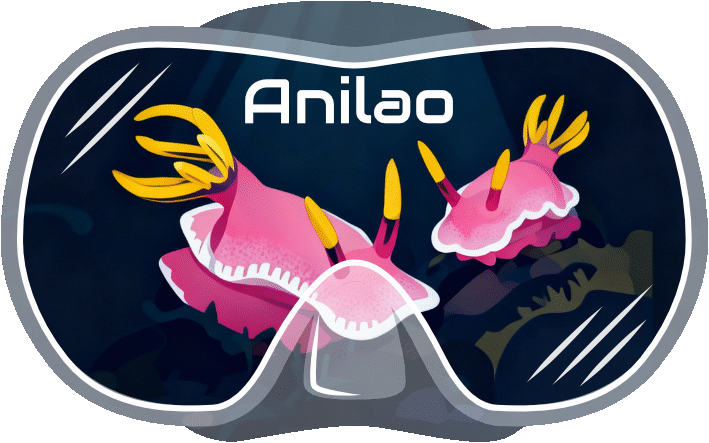
You simply can’t represent Anilao without featuring the true rockstars of the region: the Nudibranchs. We chose the vibrant Hypselodoris to capture that specific "neon-on-dark" aesthetic that makes diving here so addictive. The stark contrast of the hot pink and electric yellow against the deep, midnight-blue background mimics the feeling of spotting these little gems through your camera lens or focus light. It’s a design dedicated to the patience of the hunt and the splash of color that rewards it.
Diving Anilao
Anilao, a couple of hours south of Manila, is the Philippines' macro capital and a magnet for underwater photographers. The sloping black-sand and rubble sites hold an extraordinary density of small, strange animals — nudibranchs above all, with Anilao regarded as one of the richest places in the world to find them. It is also a major centre for blackwater diving, drifting at night over deep water to photograph pelagic larvae. The diving itself is easy, shallow and current-light; the challenge is spotting things the size of a grain of rice.
- Best time to dive
- November to May, with peak critter activity from December to March
- Difficulty
- Easy — shallow and calm, but demands good buoyancy
- Water temperature
- 25–29°C
- Visibility
- 10–25m
Top dive sites
- •Secret Bay — Muck site for rare octopus and frogfish
- •Basura — Classic critter site — the name means rubbish
- •Kirby's Rock — Wall and slope with better coral
- •Blackwater dives — Night drifts over deep water for pelagic larvae
What you’ll see
Frequently asked questions
When is the best time to dive Anilao?
November to May is the dry season and the main window, with December to March generally regarded as the peak for nudibranchs and rare critters. The June to October period brings the south-west monsoon with more rain and rougher crossings, though diving continues. Water stays warm at 25 to 29°C year-round. Since most of the appeal is small animals in shallow water, sea conditions matter more than temperature.
Do I need to be a photographer to enjoy Anilao?
It helps, but no. Anilao rewards slow, patient diving — hovering over sand while a guide points out an animal you would never have found alone. Divers who enjoy that hunting style love it whether or not they carry a camera. If you want reef scenery, coral walls and big fish, you will find Anilao underwhelming; the coral is decent in places but the destination exists for its critters.