Koh Tao
South East Asia
Thailand
£2.50
Koh Tao: The Diving World's Student Hub
Koh Tao is the "Diver’s University" of the world. This small island in the Gulf of Thailand certifies more divers annually than almost anywhere else on the planet. It is famous for its relaxed vibe, crystal-clear bays, and granite pinnacles like Chumphon and Southwest that rise from the deep. While it gets its name ("Turtle Island") from its shape, the reefs here are a bustling metropolis of reef fish. It is the kind of place where you can spot a massive Whale Shark in the morning and relax on a white sand beach at sunset. It is the ultimate rite of passage for the global diving community.
Why We Chose This Sticker Design
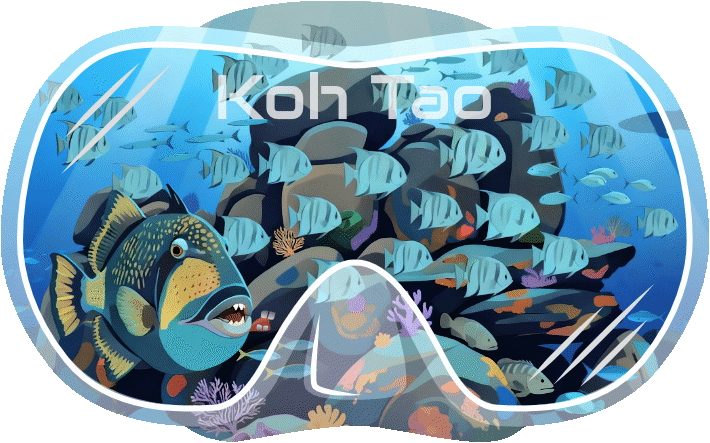
This design pays homage to the true ruler of the Koh Tao dive sites. While everyone hopes for a Whale Shark, the animal every diver actually remembers is the Titan Triggerfish. We placed this infamous character front and center, highlighting its prominent teeth and "don't mess with me" expression. It is the unofficial mascot of the island—a fish that demands respect (and a wide berth) during nesting season. To balance the composition, we filled the background with a school of Spadefish (Batfish) and the classic granite boulders that define the underwater topography of sites like White Rock.
Diving Koh Tao
Koh Tao in the Gulf of Thailand certifies more divers than almost anywhere else on earth, and that reputation as a training island sometimes obscures how pleasant the diving actually is. The water is warm enough year-round that a shorty is often plenty, the sites are shallow granite pinnacles and coral gardens, and the island is compact, cheap and set up entirely around diving. Chumphon Pinnacle is the standout — a granite seamount that attracts big schools and, with luck, a whale shark. The trade-off is variability: visibility swings from a murky 5 metres to a beautiful 30 depending on plankton and weather, and popular sites can be busy with training groups. As a place to learn to dive or to log easy, warm, sociable dives, it is hard to beat.
- Best time to dive
- March to September; October to December is the monsoon
- Difficulty
- Beginner friendly — one of the world's main training destinations
- Water temperature
- 28–30°C year-round
- Visibility
- 5–30m, highly variable
Top dive sites
- •Chumphon Pinnacle — The signature site — big schools, occasional whale sharks
- •Southwest Pinnacle — Granite pinnacles with barracuda and grouper
- •Sail Rock — A day trip, with a famous vertical chimney swim-through
- •HTMS Sattakut — Purpose-sunk wreck at around 30m
- •Japanese Gardens — Shallow, calm coral — ideal for first dives
What you’ll see
Frequently asked questions
Is Koh Tao a good place to learn to dive?
It is one of the best in the world for it, and the reason is a combination of warm shallow water, sheltered bays, low prices and enormous competition between schools. The island runs a huge volume of Open Water courses, which means instructors are experienced and equipment is well used but well maintained at reputable shops. The flip side of that volume is that standards vary, so choose a school on its reputation and class sizes rather than price alone, and ask how many students share one instructor in the water.
When can I see whale sharks at Koh Tao?
Whale sharks pass through the Gulf of Thailand unpredictably, with the most commonly cited windows being March to May and September to October. Chumphon Pinnacle and Sail Rock are the sites where they turn up most often. Be realistic: these are genuinely chance encounters rather than a reliable seasonal aggregation, and plenty of divers spend a week on Koh Tao without seeing one. Treat a sighting as a bonus on top of pleasant, easy diving rather than the reason to book the trip.
What is the best time of year to dive Koh Tao?
March to September offers the most settled conditions, and many divers rate April to July as the pick for warm, calm water. The monsoon runs roughly from late October through December, bringing rain, wind and reduced visibility, and some boats cancel trips to the exposed pinnacles. Water temperature stays at 28–30°C all year, so cold is never a factor. January and February are a decent shoulder season — quieter on the sites, with conditions improving as the monsoon fades.