Raja Ampat
South East Asia
Indonesia
£2.50
Raja Ampat: The Crown Jewel of the Coral Triangle
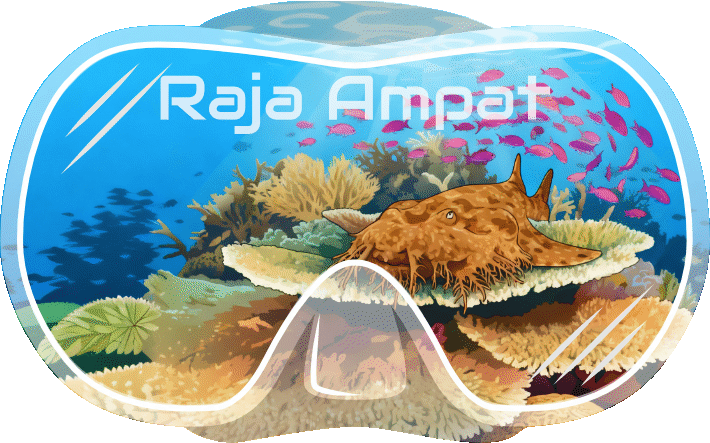
Raja Ampat (meaning "The Four Kings") isn't just a dive trip; it is a pilgrimage to the center of marine biodiversity. Located off the coast of West Papua, this archipelago holds the world record for the most fish species counted on a single dive. It is the epicenter of the Coral Triangle, offering a kaleidoscope of vibrant soft corals, walking sharks (Epaulette sharks), and oceanic mantas. Whether you are exploring the mangroves of the Dampier Strait or the colorful ridges of Misool, diving here feels like visiting a planet where nature was allowed to evolve without limits.
Why We Chose This Sticker Design
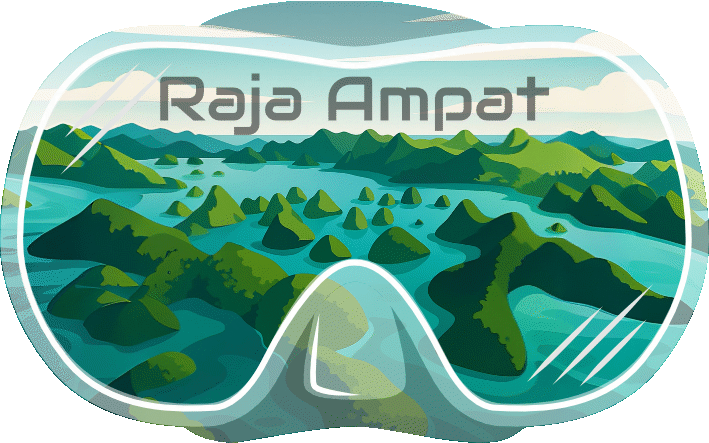
While the reefs are legendary, we chose to feature the region’s most recognizable postcard view. The design showcases the breathtaking limestone karst islands of Piaynemo (or Wayag), scattered like emerald gems across a turquoise lagoon. We focused on the dramatic topography of these mushroom-shaped islands because they are the defining symbol of the region, creating a "lost world" atmosphere that starts before you even put your face in the water.
Diving Raja Ampat
Raja Ampat sits at the heart of the Coral Triangle, off the north-west tip of West Papua, and it is the most biodiverse marine region ever surveyed. A single dive at Cape Kri holds the record for the most fish species counted on one dive. What makes it special isn't one signature animal but the sheer density of everything at once — walls of fusiliers, resident wobbegong sharks draped over the coral, reef mantas queueing at cleaning stations, and pygmy seahorses on the sea fans. The trade-off is remoteness: getting there means a flight to Sorong and then a boat, and the currents that feed all this life demand respect. Most divers visit either by liveaboard, which reaches the far-flung sites around Misool and Wayag, or from a resort in the Dampier Strait.
- Best time to dive
- October to April (calmest seas, most liveaboards running)
- Difficulty
- Intermediate to advanced — currents are the main challenge
- Water temperature
- 27–30°C, a 3mm suit is plenty
- Visibility
- 10–30m — plankton-rich water is what feeds the fish
Top dive sites
- •Cape Kri — Record-holder for most fish species on a single dive
- •Blue Magic — Seamount with reef and oceanic manta cleaning stations
- •Sardine Reef — Dense schooling action in the Dampier Strait
- •Boo Windows (Misool) — Two swim-through "eyes" in a coral ridge
- •Magic Mountain (Misool) — Manta cleaning station on an exposed seamount
What you’ll see
Frequently asked questions
When is the best time to dive Raja Ampat?
October to April is the main season, with the calmest seas and the most liveaboards operating — many divers rate December to March as the sweet spot. June to September brings stronger winds, particularly in the south around Misool, and some liveaboards reposition elsewhere, though resorts in the Dampier Strait dive year-round. Manta activity is generally strongest between December and March. Water sits at 27–30°C whenever you go, so seasonality is about sea conditions and access rather than temperature.
Do I need to be an experienced diver for Raja Ampat?
You should be comfortable in current. Many of the best sites are seamounts and channels where the water moves, and reef hooks are standard kit on sites like Blue Magic and Cape Kri. Most operators ask for Advanced Open Water and around 50 logged dives, particularly on liveaboards. That said, the Dampier Strait has plenty of gentle reef and jetty diving, so a newer diver basing themselves at a resort can have a superb trip — just be honest with your guide about your experience so they pick the right sites and tides.
What will I see diving in Raja Ampat?
More species than anywhere else on the planet. The headline animals are reef and oceanic manta rays at cleaning stations, tasselled wobbegong sharks resting under table corals, and the walking shark that "strolls" across the reef on its fins at night. On the macro end there are pygmy seahorses on sea fans, nudibranchs and shrimps in abundance. But the thing most divers remember is the volume — schooling fusiliers, batfish, sweetlips and jacks in numbers that make the reef hard to see behind them.