Similan Islands
South East Asia
Thailand
£2.50
Similan Islands: The Crown Jewel of the Andaman
If Koh Tao is where people learn to dive, the Similan Islands are where they go to fall in love with the ocean. This archipelago is Thailand’s undisputed diving heavyweight. Unlike the limestone karsts found elsewhere, the Similans are defined by massive granite boulders that create dramatic underwater swim-throughs and canyons. But the real magic happens at sites like Richelieu Rock (often included in Similan liveaboard itineraries), a horseshoe-shaped pinnacle that acts as a magnet for the biggest fish in the sea. During the season, this is the best place in the country to come face-to-face with a Whale Shark.
Why We Chose This Sticker Design
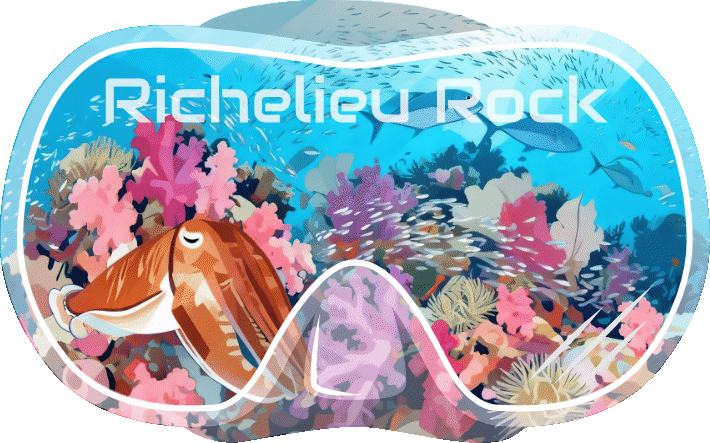
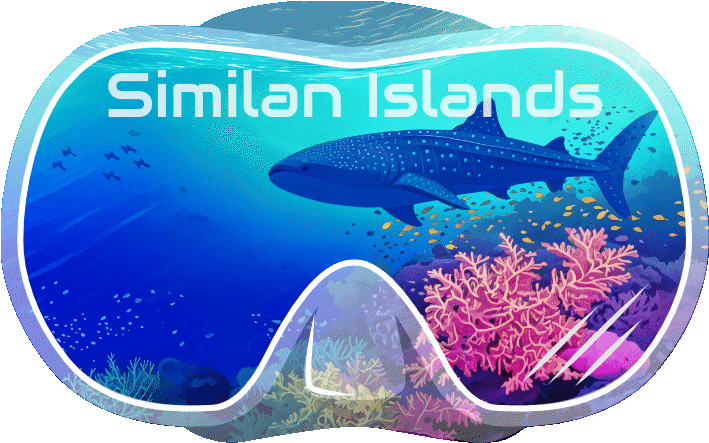
This design brings together the two most iconic elements of a Similan liveaboard trip. We devoted the center of the frame to the Whale Shark, the holy grail for every diver visiting the region. However, a Similan dive isn't just about the blue; it's about the color on the rocks. We framed the bottom right with lush, vibrant pink and purple soft corals (Dendronephthya), which carpet the granite boulders of this marine park and are renowned for being some of the most colorful in the world.
Diving Similan Islands
The Similan Islands sit in the Andaman Sea off Khao Lak, and they look nothing like the coral-dominated diving further east. The signature landscape is granite: enormous rounded boulders stacked into arches, canyons and swim-throughs, with soft coral and fans filling the gaps. The park operates a hard season — it is closed by Thai authorities outside roughly 15 October to 15 May — which concentrates diving into the calm, clear half of the year. Most people dive it by liveaboard out of Khao Lak or Phuket, usually on a trip that also takes in Koh Bon, Koh Tachai and Richelieu Rock further north, where the manta and whale shark odds improve considerably. It is comfortable, scenic diving with excellent visibility and enough current at the northern sites to keep it interesting.
- Best time to dive
- Mid-October to mid-May only — the park closes outside this window
- Difficulty
- Beginner to intermediate; more current at Koh Bon and Koh Tachai
- Water temperature
- 27–30°C
- Visibility
- 20–30m, often excellent
Top dive sites
- •Elephant Head Rock — Granite boulder maze of swim-throughs and canyons
- •Christmas Point — Boulder arches with soft coral
- •Koh Bon — Manta ray cleaning station on a limestone ridge
- •Koh Tachai Pinnacle — Exposed seamount, strong current, big fish
- •West of Eden — Sloping reef with sea fans and healthy coral
What you’ll see
Frequently asked questions
When are the Similan Islands open for diving?
The Similan Islands National Park is closed each year during the south-west monsoon and typically opens from around 15 October to 15 May. Those dates are set by the Thai park authorities and can shift slightly year to year, so confirm before booking flights. Within the season, February to April usually delivers the calmest seas and the best visibility, and it is also the window when whale shark sightings at Koh Bon and Koh Tachai are most frequently reported. Outside the season there is no legal diving in the park at all.
Do I need a liveaboard to dive the Similans?
Not strictly, but it is by far the better option. Day trips run from Khao Lak and Phuket, and they work, but the islands are a long boat ride offshore and a day trip typically gives you two dives after several hours in transit. A liveaboard of three or four nights gets you four dives a day, reaches the northern sites at Koh Bon, Koh Tachai and Richelieu Rock where the mantas and whale sharks are, and lets you dive the popular sites early before the day boats arrive.
What makes Similan diving different from other Thai sites?
The terrain. Where most tropical diving is coral over sand or wall, the Similans are built from enormous granite boulders, creating arches, chimneys and canyons big enough to swim through comfortably. It gives dives a structure and sense of scale that reef diving rarely has, and it photographs beautifully in the strong Andaman visibility. Combine that with soft coral colour on the northern sites and a genuine chance of mantas at Koh Bon, and you get variety that is hard to match on a single short trip.